Section author: Rebecca Vederhus, Sebastian Jentschke
From SPSS to jamovi: Correlation
This comparison shows how a Pearson’s correlation is conducted in SPSS and jamovi. The SPSS test follows the description in chapter 8.4.1-8.4.2 in Field (2017), especially figure 8.7-8.8 and output 8.1. It uses the data set Exam Anxiety.sav which can be downloaded from the web page accompanying the book.
SPSS |
jamovi |
|---|---|
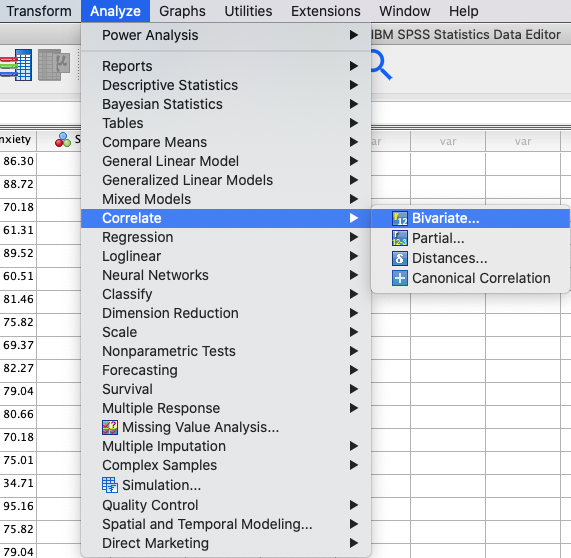
In SPSS you can run a correlation using: |
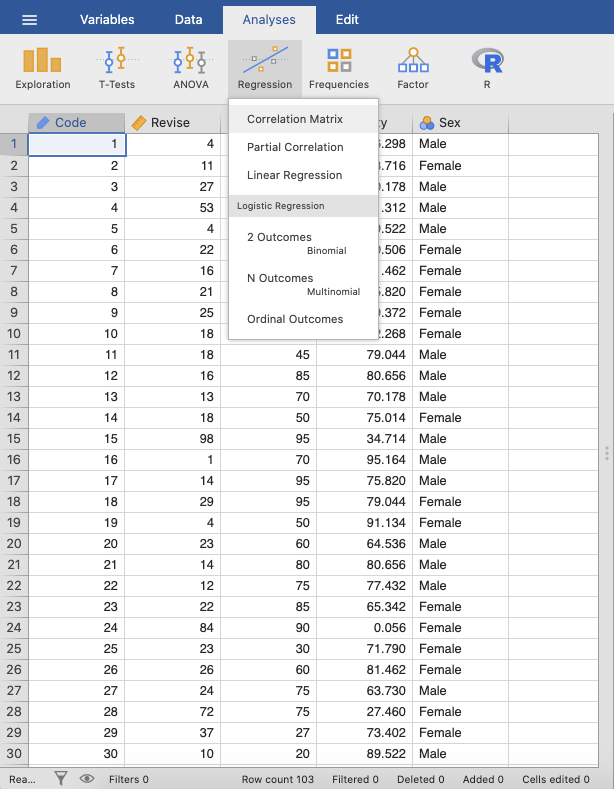
In jamovi you do this using: |
|
|
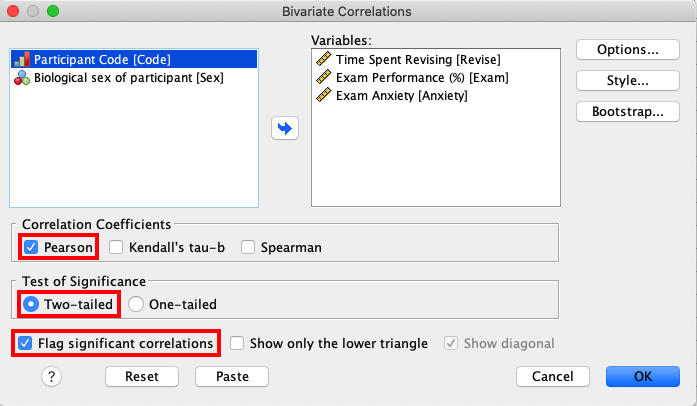
In SPSS, move the variables |
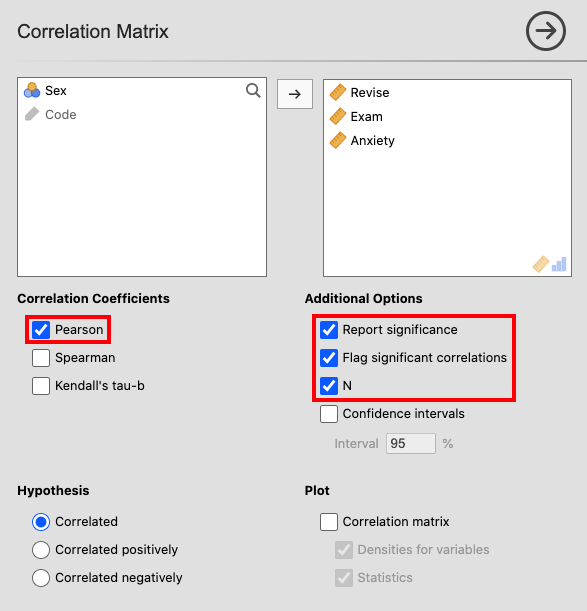
In jamovi, move the variables |
|
|
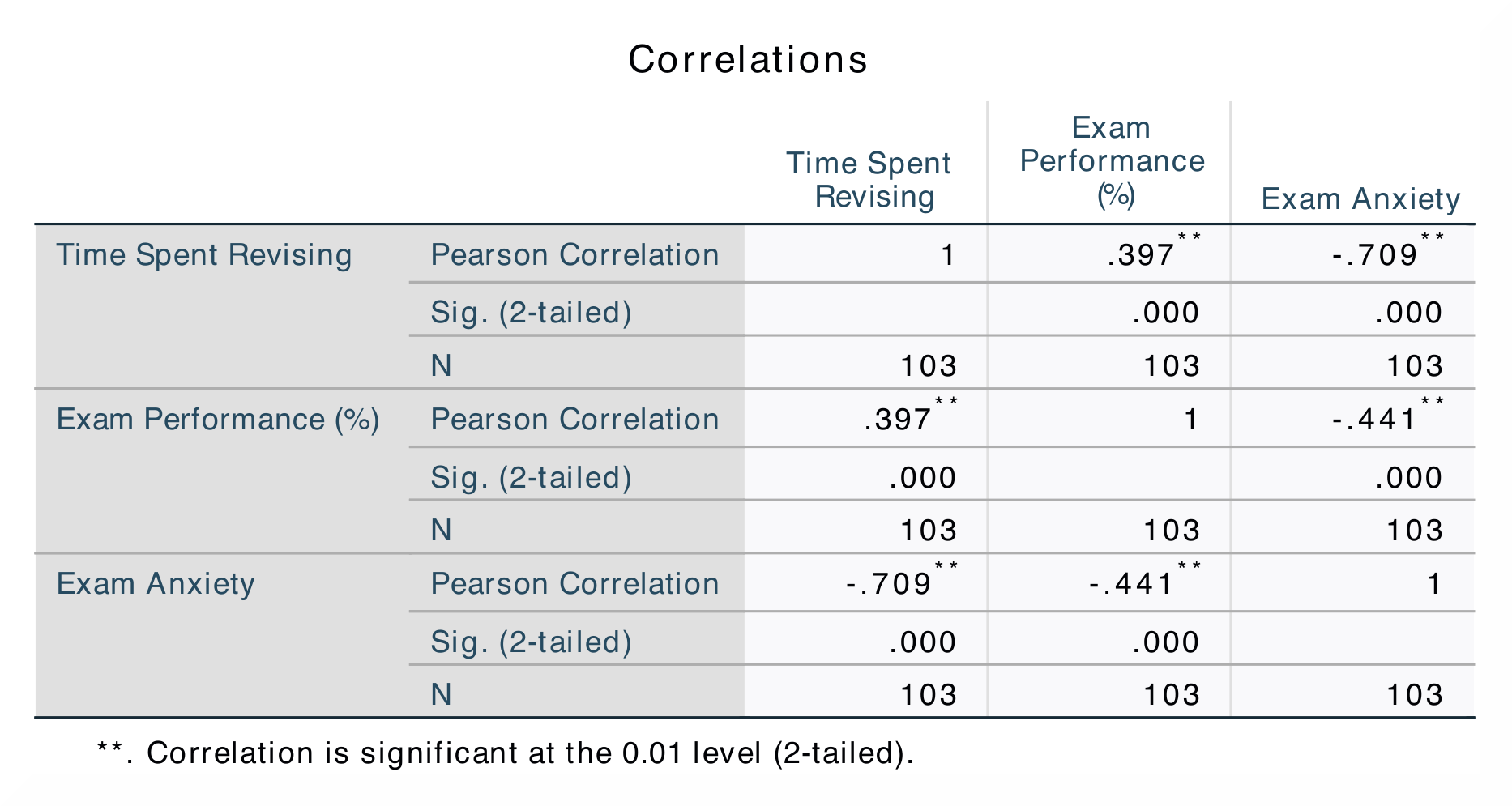
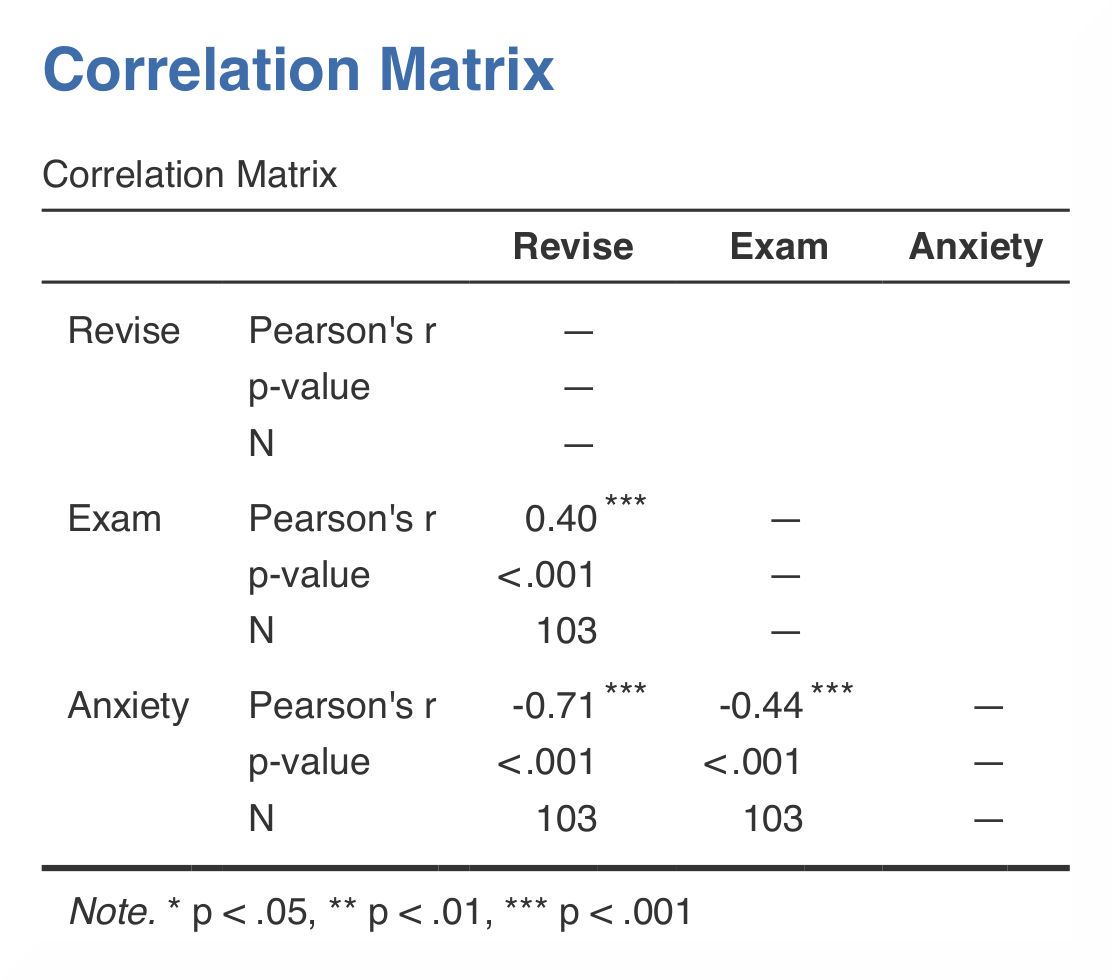
The results are essentially the same in SPSS and in jamovi. |
|
|
|
In SPSS, you can tell if a correlation is significant by noting the amount of asterisks after the correlation coefficient. The correlation matrix shows the correlation coefficient, the p-value, and the sample size (N). |
jamovi, in accordance with APA-style, flags significant correlations using one (p < .05), two (p < .01) or three (p < .001) asterisks. In contrast, in SPSS all correlations above p < .01 level are simply marked using two instead of three asterisks. |
In SPSS, Pearson’s r is found both underneath and over the diagonal, while in jamovi the coefficient is only shown underneath. This makes it much easier to find relevant information from the output in jamovi. The numerical values for the statistics are identical: r = 0.40, p < .001; r = -0.71, p < .001; r = -0.44, p < .001. |
|
If you wish to replicate those analyses using syntax, you can use the commands below (in jamovi, just copy to code below to Rj). Alternatively, you can download the SPSS output files and the jamovi files with the analyses from below the syntax. |
|
CORRELATIONS
  /VARIABLES=Revise Exam Anxiety
  /PRINT=TWOTAIL NOSIG FULL
  /MISSING=PAIRWISE.
|
jmv::corrMatrix(
    data = data,
    vars = vars(Revise, Exam, Anxiety),
    flag = TRUE,
    n = TRUE,
    plotDens = TRUE,
    plotStats = TRUE)
|