Section author: Sebastian Jentschke
From SPSS to jamovi: t-test for paired samples
After having demonstrated the beneficial effect of repeated-measures-designs on the standard error of mean, we conduct a t-test for paired samples. Using this test, we compare whether the number of mischieveous acts has increased after receiving a cloak of invisibility (variable
Cloak) in comparison to the number of mischieveous acts at baseline (variableNo_Cloak). This analysis is described in chapter 10.9.3 of Field (2017), especially Figure 10.12 and Output 10.8 - 10.9. We use the same data set Invisibility RM.sav which can be downloaded from the web page accompanying Andy Field’s book.
SPSS |
jamovi |
|---|---|
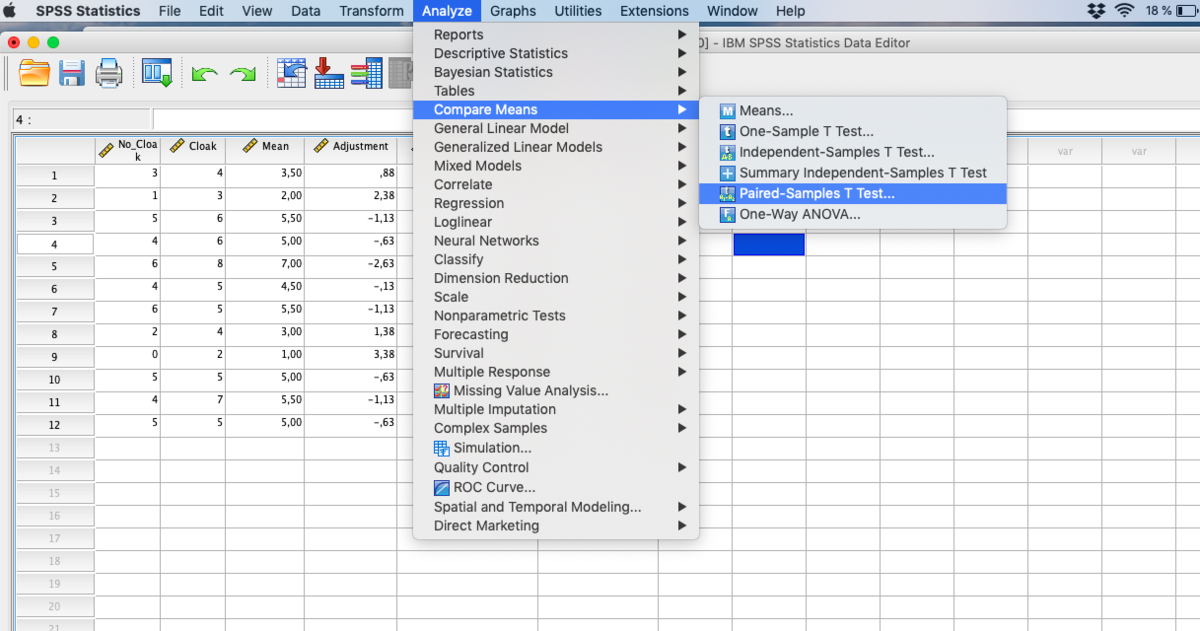
In SPSS you can set up a t-test for paired samples using: |
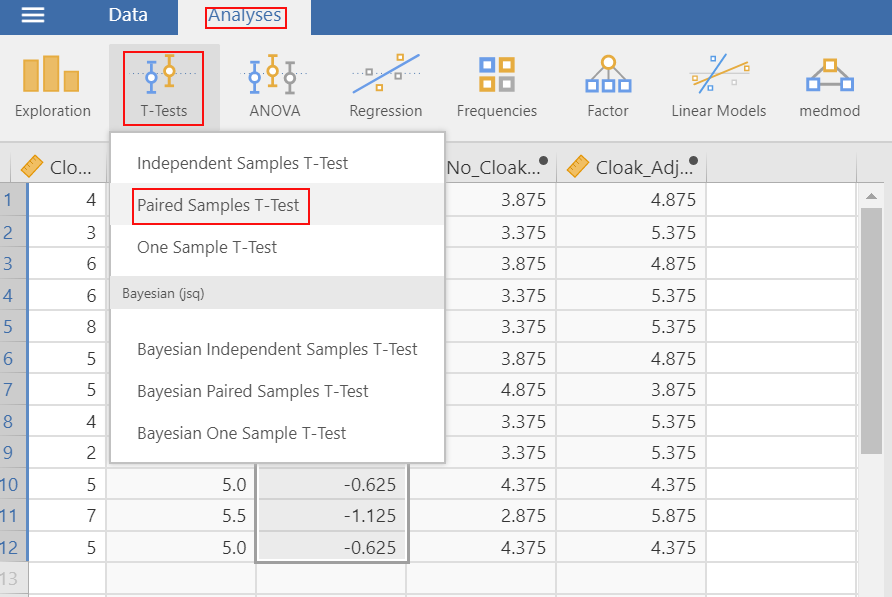
In jamovi you do this using: |
|
|
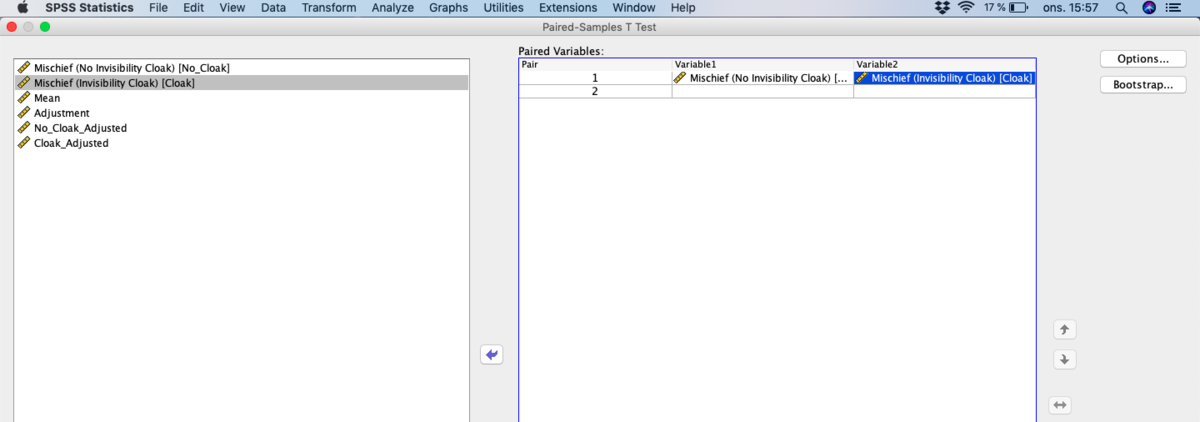
In the input window that opens, the two variables |
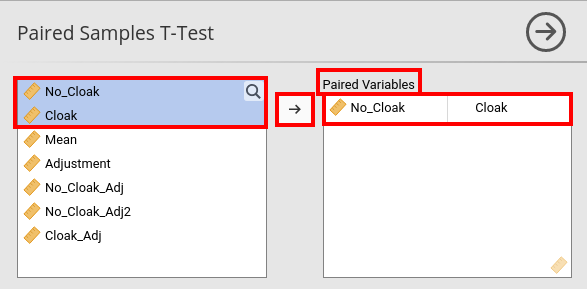
In the input panel that opens, the variables |
|
|
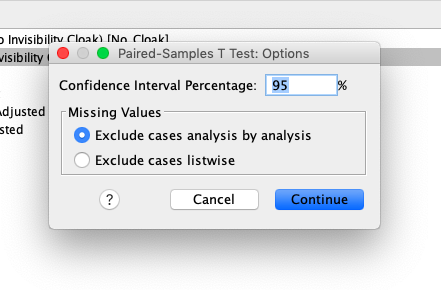
Afterwards, we press the |
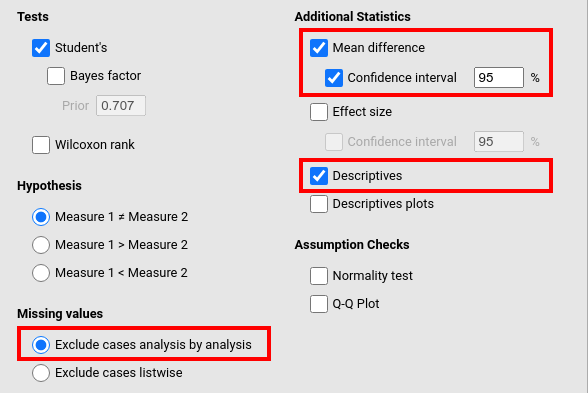
In jamovi, do we go further down in the input panel and tick |
|
|
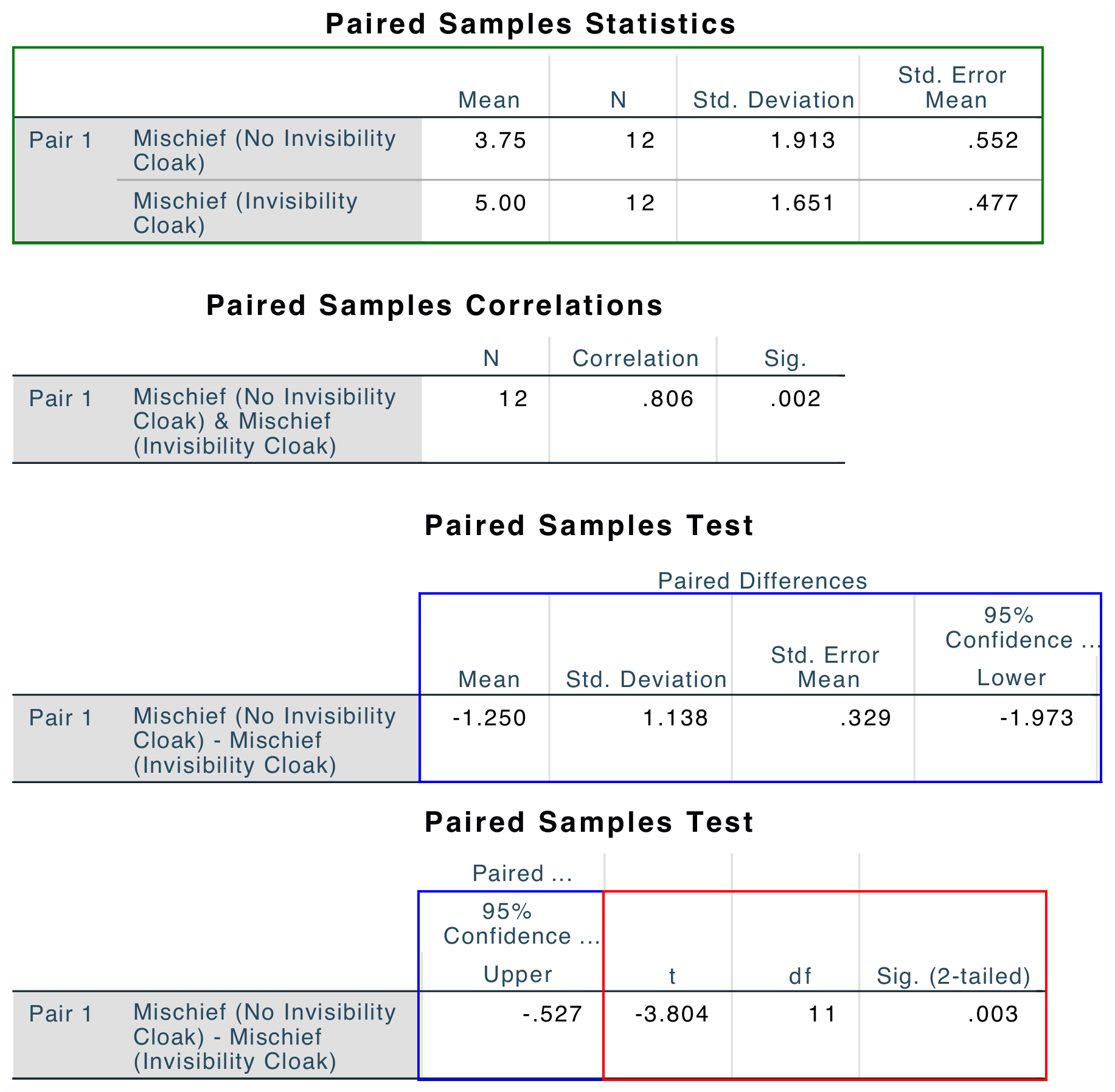
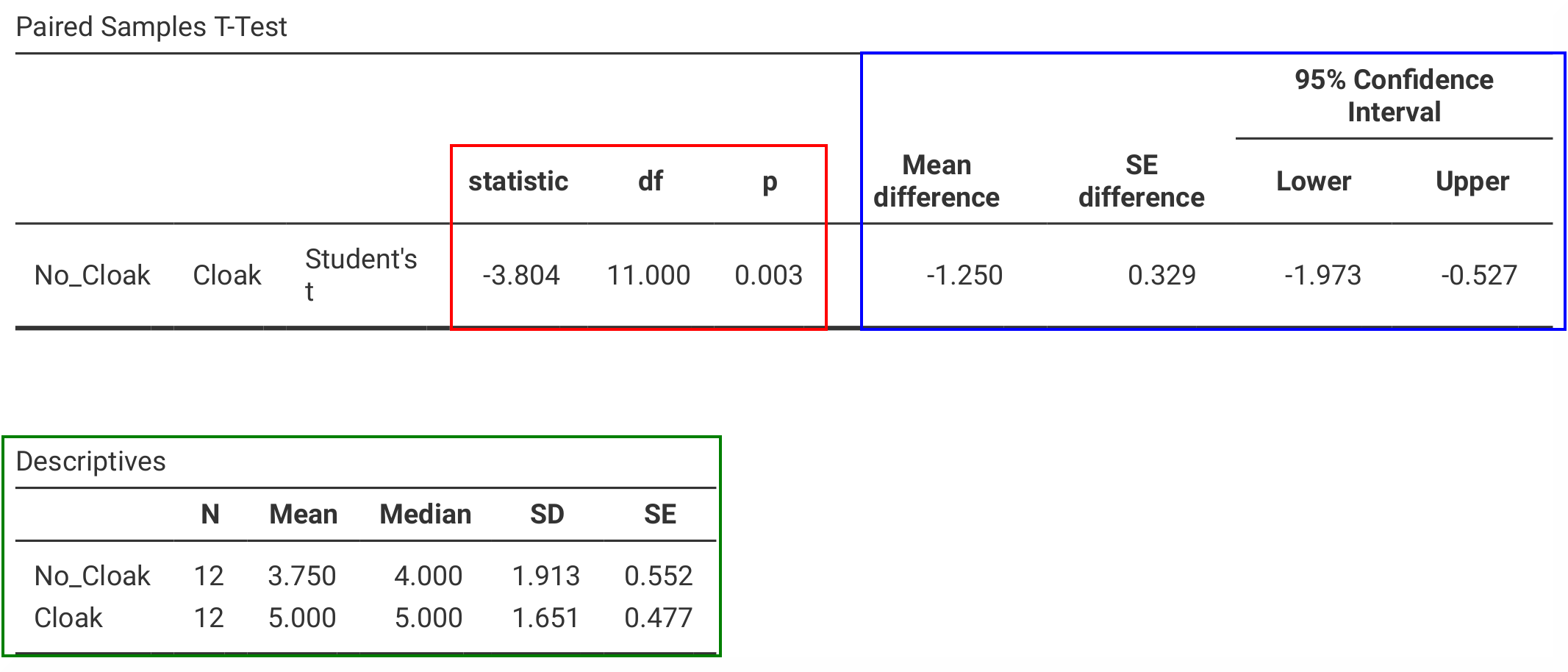
The results from SPSS and jamovi are identical, but they are arranged slightly differently. SPSS gives the mean difference (blue box) first, before giving
the t-statistics and their respective degrees of freedom and p-value (red box), in jamovi it is the other way round (statistics – red box – first and mean
difference – blue box – afterwards). Another table underneath (green box) gives the descriptive statistics for the two variables that were compared. Except
from that jamovi also reports the Median, and a slightly different way to arrange the columns (SPSS begins with the |
|
|
|
SPSS, in addition, gives the |
|
If you wish to replicate those analyses using syntax, you can use the commands below (in jamovi, just copy to code below to Rj). Alternatively, you can download the SPSS output files and the jamovi files with the analyses from below the syntax. |
|
T-TEST PAIRS=No_Cloak WITH Cloak (PAIRED)
  /CRITERIA=CI(.95)
  /MISSING=ANALYSIS.
|
jmv::ttestPS(
    data = data,
    pairs = list(
        list(
            i1="No_Cloak",
            i2="Cloak")),
    meanDiff = TRUE,
    ci = TRUE,
    desc = TRUE)
|