Section author: Rebecca Vederhus, Sebastian Jentschke
From SPSS to jamovi: Analysis of frequencies
This comparison shows how a loglinear analysis is conducted in SPSS and jamovi. The SPSS test follows the description in chapter 19.9.2 in Field (2017), especially figure 19.7 and output 19.7 - 19.10. It uses the data set Cats and Dogs.sav which can be downloaded from the web page accompanying the book.
SPSS |
jamovi |
|---|---|
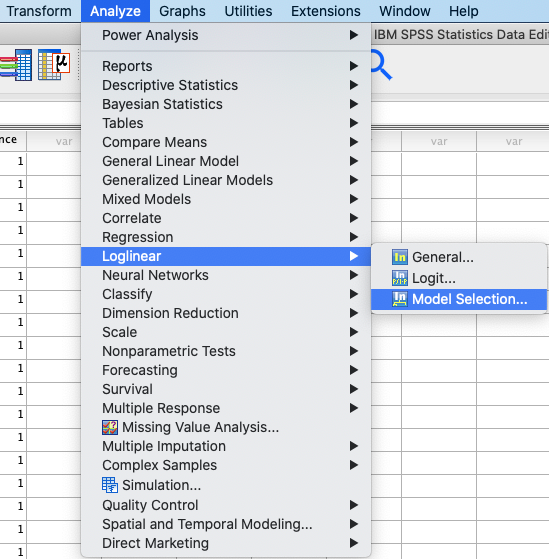
In SPSS, you can run a loglinear analysis using: |
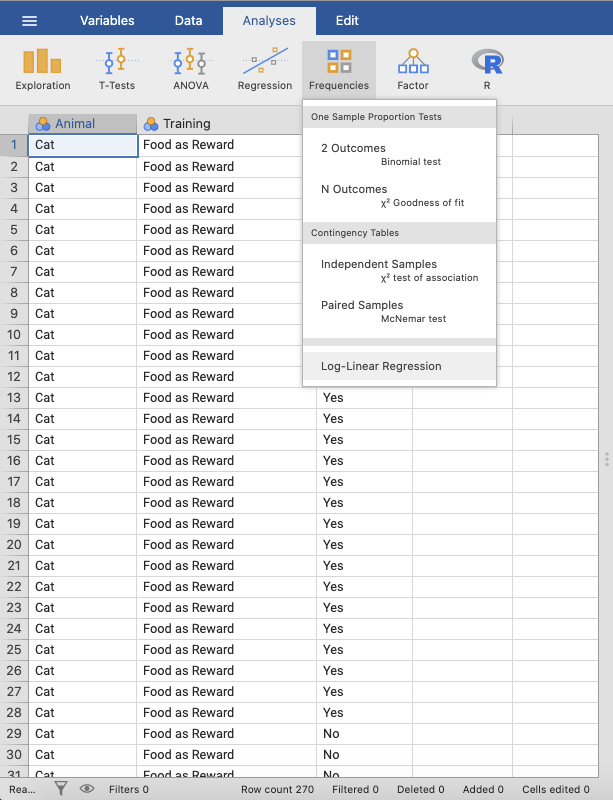
In jamovi, this can be done using: |
|
|
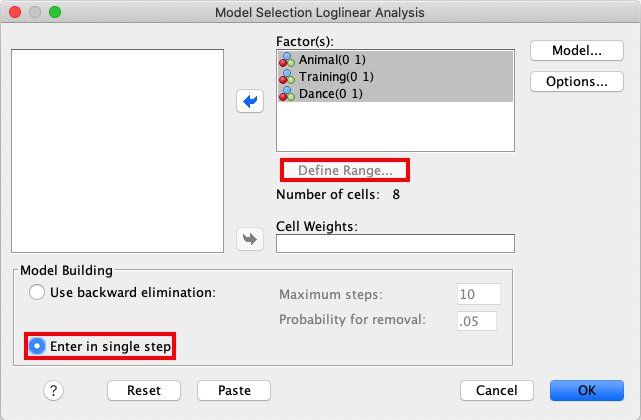
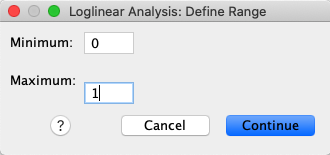
In SPSS, move the variables |
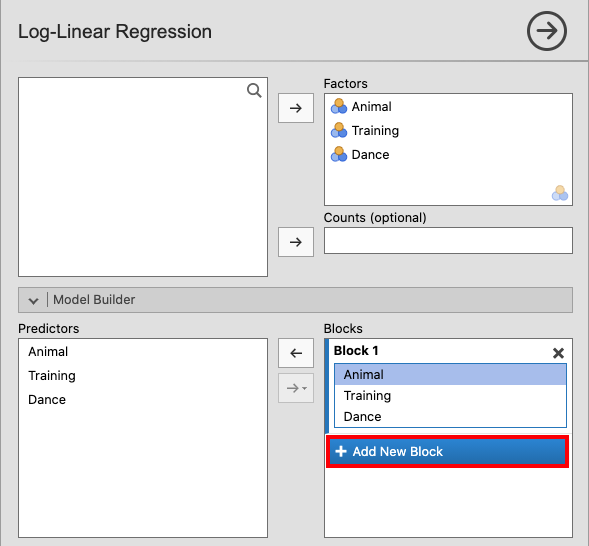
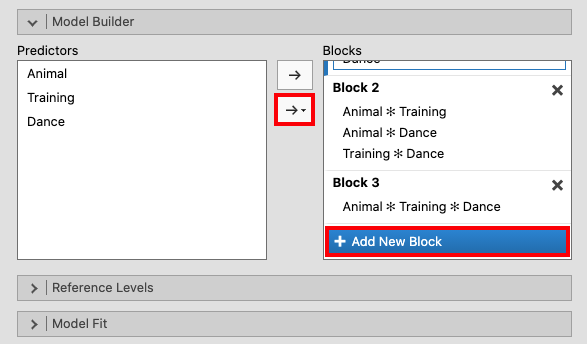
In jamovi, move |
|
|
|
|
Add another block. Mark all three variables and choose |
|
|
|
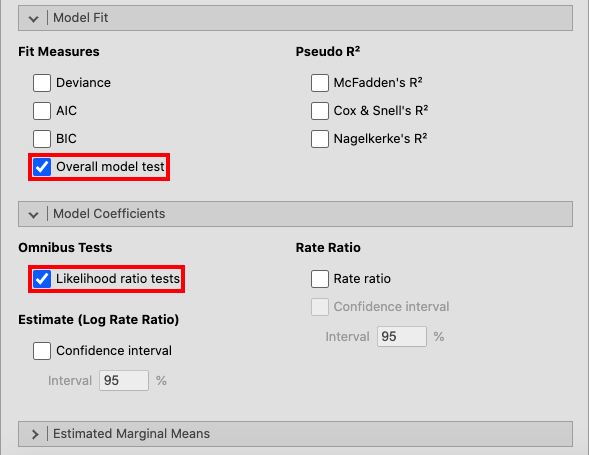
Open |
|
|
|
Only the results in the output tables |
|
|
|
|
|
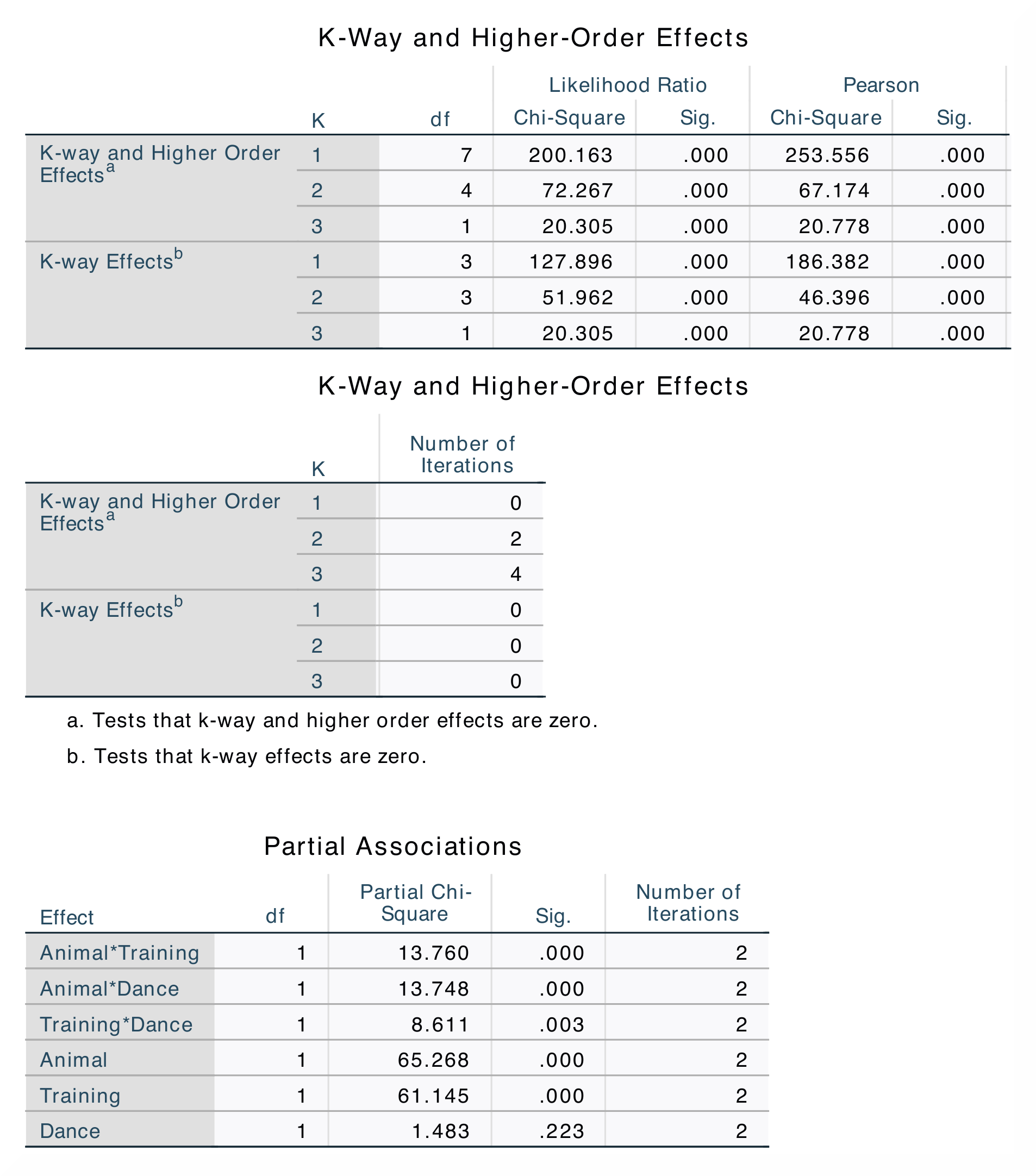
In the |
In jamovi, the values that are found in the |
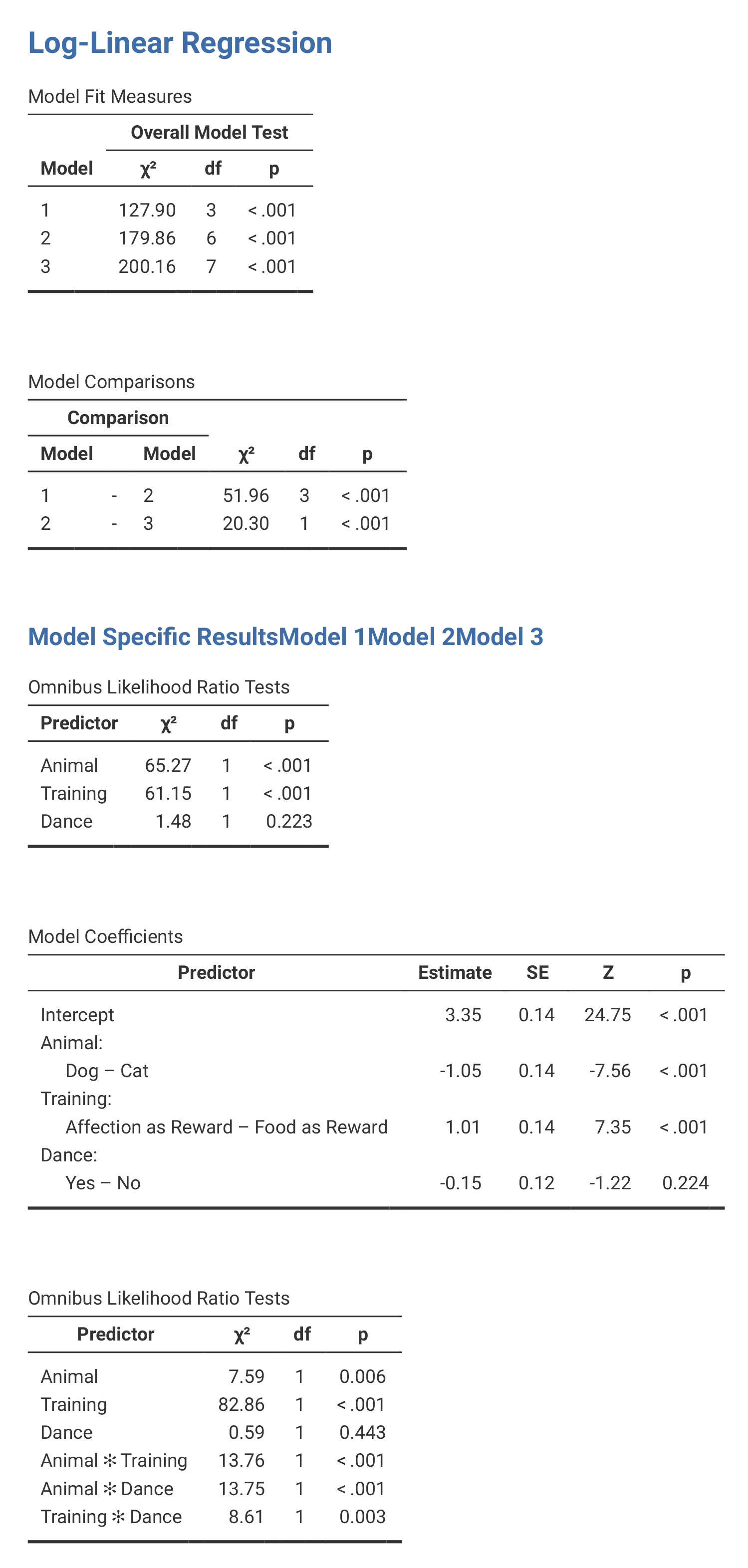
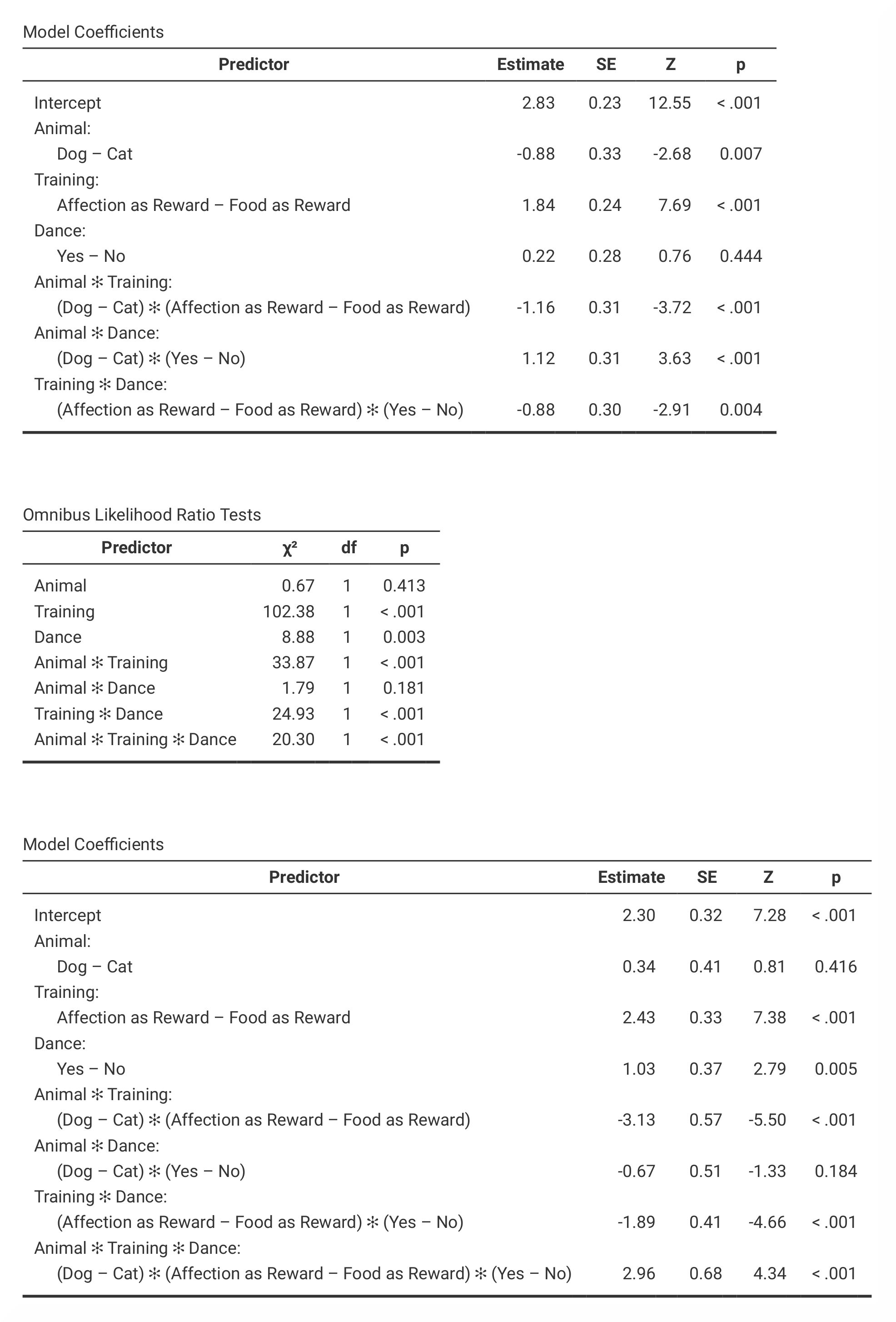
Output from the SPSS analysis contains a lot of tables that are not included in the jamovi analysis. In addition, the results from the parameter estimates tables differ from each other, and are therefore not included here. The numerical values for the statistics are the same: χ² = 127.90, p < .001; χ² = 200.16, p < .001; χ² = 51.96, p < .001: χ² = 20.30, p < .001; χ² = 65.27, p < .001; χ² = 61.15, p < .001; χ² = 1.48; χ² = 13.76, p < .001; χ² = 13.75, p < .001; χ² = 8.61, p < .01. |
|
If you wish to replicate those analyses using syntax, you can use the commands below (in jamovi, just copy to code below to Rj). Alternatively, you can download the SPSS output files and the jamovi files with the analyses from below the syntax. |
|
HILOGLINEAR Animal(0 1) Training(0 1) Dance(0 1)
  /CRITERIA ITERATION(20) DELTA(.0)
  /PRINT=FREQ RESID ASSOCIATION ESTIM
  /DESIGN.
|
jmv::logLinear(
    data = data,
    factors = vars(Animal, Training, Dance),
    blocks = list(
        list("Animal", "Training", "Dance"),
        list(c("Animal", "Training"), c("Animal", "Dance"),
             c("Training", "Dance")),
        list(c("Animal", "Training", "Dance"))),
    refLevels = list(
         list(var = "Animal", ref = "Cat"),
         list(var = "Training", ref = "Food as Reward"),
         list(var = "Dance", ref = "No")),
     modelTest = TRUE,
     dev = FALSE,
     aic = FALSE,
     pseudoR2 = NULL,
     omni = TRUE)
|